+44 Hangi Ülkenin Kodu? İngiltere Telefon Kodu Rehberi
If you’ve received a call or text message starting with +44, you’re probably wondering who’s calling and where they’re calling from. The short answer: England (United Kingdom) . But there’s a lot more to know behind the scenes — especially if you need to dial a UK number yourself, if you’re receiving recurring calls from an unfamiliar +44 number, or if you’re curious how international dialing codes work.
This guide will cover everything you need to know about the +44 code: what it means, how to dial it correctly from the USA, the structure of UK phone numbers, why you might receive calls from +44 numbers, and how to distinguish a legitimate business call from a scam. By the end of this guide, you’ll know exactly what to do when +44 appears on your screen.
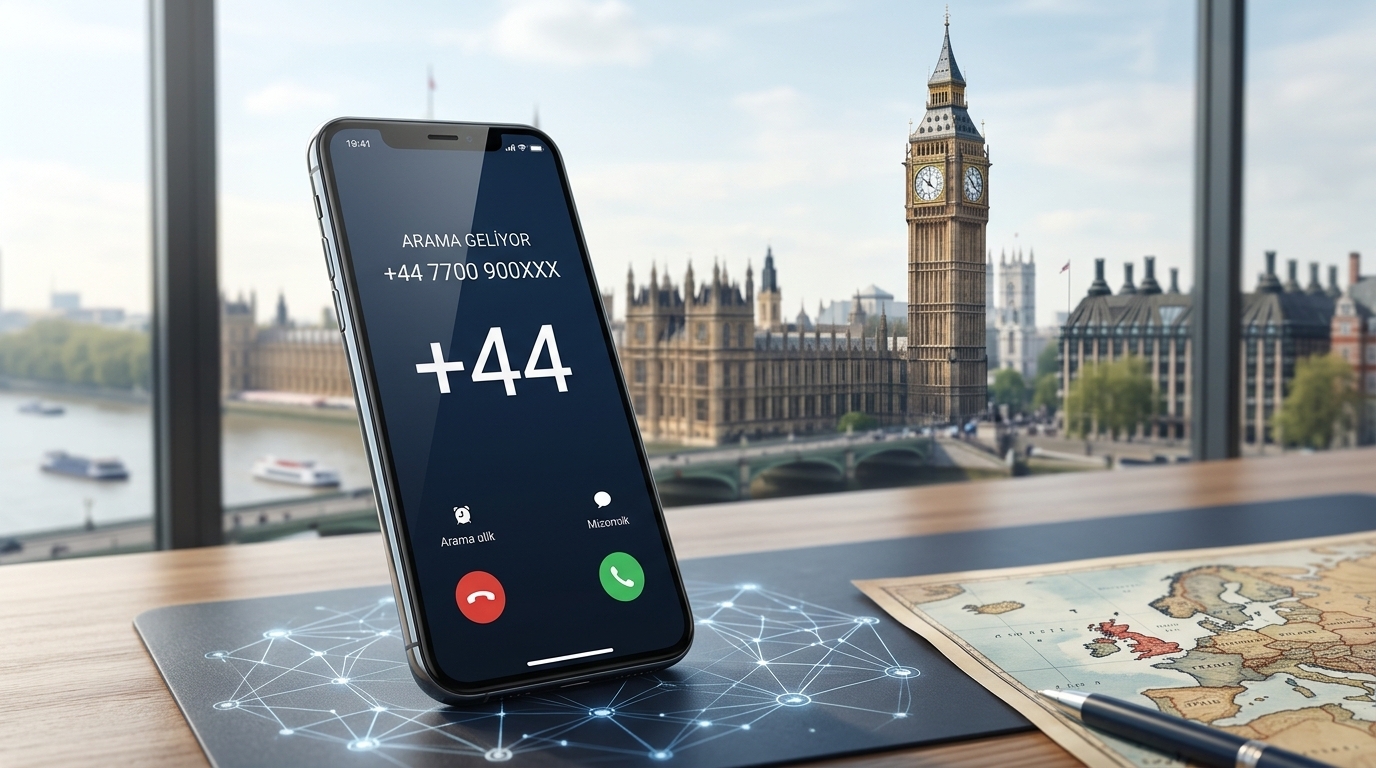
What is the country code +44 hangi?
+44 is the international dialing code assigned to the United Kingdom . It covers England, Scotland, Wales, and Northern Ireland, as well as the British Crown Dependencies of Guernsey, Jersey, and the Isle of Man.
Country codes like +44 are assigned by the International Telecommunication Union (ITU) as part of a global numbering scheme called E.164. This is the same system that assigns the common code +1 to the US and Canada, and +353 to Ireland. Every country or region in the world has one of these codes, and they ensure that the call is routed to the correct country before the local exchange is activated.
You may sometimes see the +44 code written as 0044. Both refer to the same location. The plus sign (+) is a universal placeholder that your mobile phone automatically converts to the appropriate exit code for your location. With landlines, however, you usually need to dial the exit code manually; this is why some countries write 0044 in full.
Why am I receiving calls from +44 numbers?
There are several common reasons why a +44 number might appear on your phone, and most of them are quite ordinary.
A UK-based business, recruiter, customer service line or shipping company might be calling you about something you’ve actually signed up for — for example an online order, a job application or a subscription service operating in the UK. Many companies use virtual +44 numbers for cost advantage, even if their support team isn’t physically located in the UK.
On the other hand, unwanted or repetitive +44 calls — especially those that ring and hang up or that ask for personal information — are often associated with international fraud operations. Scammers usually prefer foreign numbers because it is difficult for recipients to verify who is actually calling, and international spam call regulations are inconsistent from country to country.
If you receive a suspicious +44 call, don’t call the number back immediately. Some scams rely on you calling back, which can connect you to a premium line, leading to high bills. A safer approach is to look up the number online, check your carrier’s spam reporting tool, or block the number outright.
How to call a UK number from the USA?
Calling the UK from the US follows a simple three-step process:
- Dial 011 — the exit code used to make international calls from the United States and Canada.
- Dial 44 — that’s the country code for the United Kingdom.
- Dial the UK phone number itself, but omit the leading 0 .
So a UK number that appears as 020 7946 0958 domestically will become 011 44 20 7946 0958 when dialed from the US. If you’re calling from a mobile phone, you can usually skip the manual exit code and dial +44 20 7946 0958; the plus sign handles the conversion automatically.
The leading 0 rule is constantly confusing and worth emphasizing again, as it’s the most common reason international calls fail to connect. Every UK number is written with a leading 0 at home, but that 0 is only for domestic calls. The moment you add +44, the 0 drops and is replaced by +44. If you keep both, you’ll encounter an error message or silence instead of a ringing phone.
Structure of UK Telephone Numbers
A UK phone number consists of three parts, once you understand the pattern: the country code, the area code (also known as the National Destination Code), and the local subscriber number.
Area codes in the UK are not a fixed length like in the US. For example, London’s area code is 020, and international calls to the city are dialed as +44 20. Smaller towns and rural areas have area codes that can be up to five digits long; in these cases, the following local number is correspondingly shorter. The general rule is: the shorter the area code, the longer the following local number — and vice versa.
Mobile phone numbers follow a different format. Domestic UK mobile phone numbers are always 11 digits long, including the leading 0, and usually start with 07 — like 07700 900123. When calling internationally, the same number becomes +44 7700 900123; again, the leading 0 is dropped.
The Difference Between Landline and Mobile Phone Formats
Landline numbers vary in length by region because older exchanges were established based on local capacity needs rather than a single national standard. Mobile phone numbers, on the other hand, are more consistent as they are assigned under a newer, unified numbering scheme designed for nationwide use. If you are unsure whether a number is a landline or a mobile phone, the safest method is to dial the number as it was given to you, simply replacing the leading 0 with +44.
How to send a message to +44?
Text messages follow the same formatting rules as calls. Start with +44, then type the number with the leading 0 removed. This rule applies whether you’re sending a message via your carrier’s standard SMS or using an app like WhatsApp or iMessage; both expect the international format.
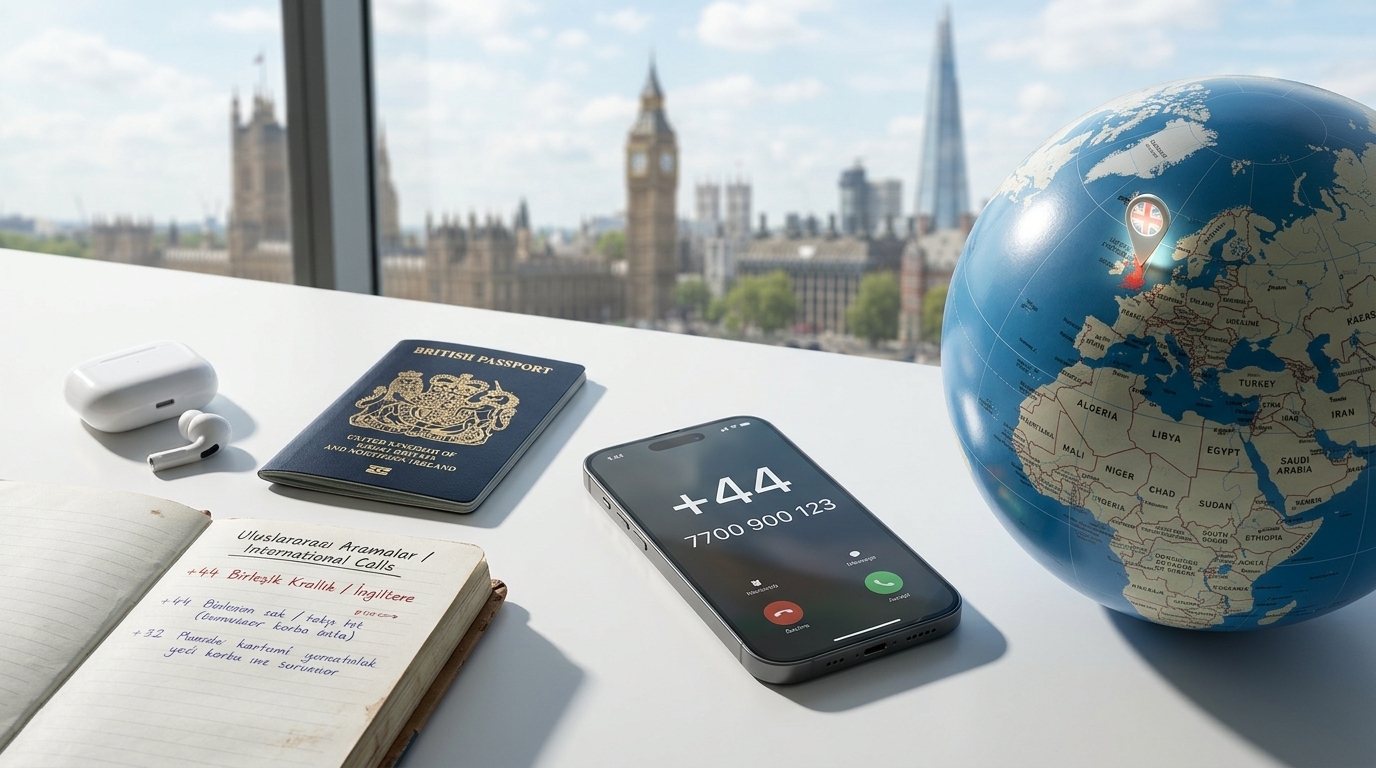
Common Mistakes Made When Calling +44 Numbers
There are a few recurring mistakes involving UK numbers, and they’re easy to avoid if you know what to look out for.
- Keeping the leading 0. Dialing +44 020 instead of +44 20 is a common mistake and will prevent the call from connecting.
- Trying to guess the area code separation. London’s area code is 020, not 0207 or 0208 as old habits sometimes suggest. Misseparating the digits won’t prevent the call from connecting, but it can cause confusion when reading the number to someone or entering it into a form that performs format verification.
- You need to use both the exit code and the plus sign. You only need one, not both. Dial 011 44 or +44 — not 011+44.
- Assuming that 0044 and +44 behave the same way on every device. They both represent the same code, but 0044 is for dialing from a landline; +44 is designed for mobile phones and provides automatic dialing.
Businesses and Virtual UK Numbers
It’s worth knowing that not every +44 number belongs to someone physically located in the UK. Many companies, from customer support centres to marketing agencies, use virtual UK phone numbers to project a local presence to British customers, even if their staff are elsewhere. This is a common practice and not inherently suspicious; however, it does mean that a +44 number alone doesn’t guarantee the caller is in the UK.
If you’re a business owner considering a virtual UK number to reach British customers, look for a provider that offers decent call forwarding, SMS support, and transparent pricing, rather than the cheapest option, as call quality and reliability vary greatly between providers.
Frequently Asked Questions on +44 hangi
Are +44 hangi and 0044 the same thing? Yes. Both represent the country code for the UK. +44 is used automatically on mobile phones, while 0044 is the manual version typically used from landlines.
Do I need to remove the leading 0 when dialing a UK number? Yes, always. The leading 0 is only for calls from within the UK. When calling from abroad, replace it with the country code.
Why am I constantly receiving calls from unfamiliar +44 numbers? This could be a legitimate UK business, a company using a virtual UK number, or in some cases, an unwanted bot call or scam attempt. If the calls are frequent and you don’t recognize the source, blocking the number is usually the safest option.
Can I call +44 toll-free? Standard +44 numbers are charged like a normal international call unless you are using an app with an international calling plan or Wi-Fi calling feature. Even some 0800 numbers that are toll-free within the UK may be charged when calling internationally.
Does the +44 code cover the whole of the United Kingdom? Yes, it covers England, Scotland, Wales, Northern Ireland, and the Crown Dependencies of Guernsey, Jersey, and the Isle of Man.
Conclusion
The +44 country code is nothing more than a prefix assigned to the UK under the international numbering system — it’s not as complicated as it seems. Whether you’re trying to figure out who’s calling you, planning to call a UK business, or preparing to communicate with someone across the ocean, the process boils down to one consistent rule: replace the domestic 0 with +44 and don’t double the exit codes. Once you get that right, the rest is simply a matter of entering the numbers correctly.
For more details on how international search codes are structured globally, Wikipedia’s article on country search codes is a solid reference point.